Tuesday, November 11, 2025

Troublemakers by Carla Shalaby explained in quotes

In this blog posts, I will be discussing 3 quotes form Carla Shalaby's article Troublemakers. Shalaby article goes in detail that early schooling is built around rigid obedience, not around how young children actually develop. Shalaby shows how exclusionary practices like suspension, time-outs, and constant removal from class don’t fix behavior; they just cut kids off from academics and belonging, feeding long-term inequality that hits children of color hardest.


(Quote: 1)“School does not welcome this protest, this natural way of childhood. Unquestioning deference to authority is the requirement and the expectation of school, where adult directives replace children’s own desires"


What the quotes means is that kids are naturally curious, noisy, active, and full of “no” and “why.” But school is built to reward quiet obedience, not questioning. So the normal way kids exist in the world clashes with what school demands from them. This quote shows the basic tension between kids and school: children come in wired to explore, ask questions, and push back, but school expects them to sit still, follow orders, and accept adult authority without argument.


(Quote: 2) "Instead, we turn a gaze of pathology on children. At the age of five, if you cannot follow directions and work independently, you are likely to begin a long series of interactions with the school’s various mechanisms for identifying, labeling, and remediating deficits. Suddenly and swiftly, children become problems."


Here, Shalaby is pointing out how quickly schools medicalize or pathologize kids. A five-year-old who struggles to follow directions is not shocking that’s literally what five-year-olds are like. But instead of questioning whether our demands make sense for such young children, we start labeling them, sending them through special services, and treating them as if they’re defective


Reflection/Questions/Comments To ShareI like the idea that every time a child refuses a demand, they’re telling us something about that demand. Instead of only asking “What’s wrong with this kid?”, we could ask “Why doesn’t this request work for this child in this moment?”

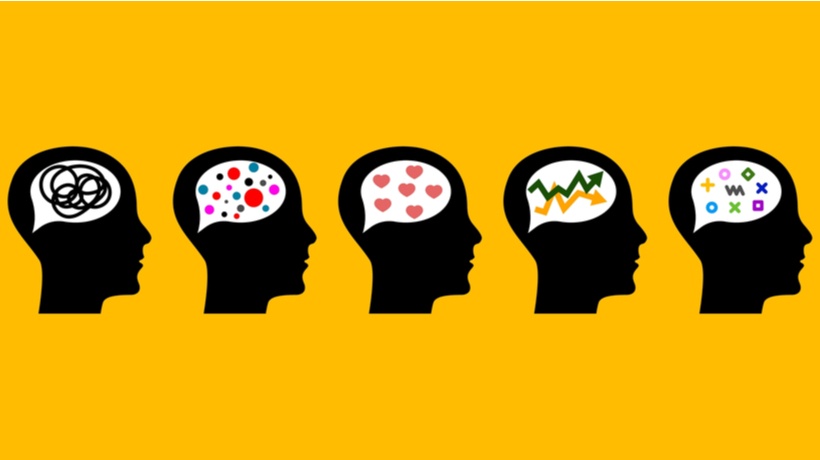
Child Mind Institute Quotes

In this week's reading of our blog posts on "Child Mind Institue" an article written by Caroline Miller, is an article that disscuss the term "Nuerodiversity" in the context of a school setting. She goes into detail with emphasizing strengths in neurodiversity students and how they are facing challenges in their school settings. Here in this blog I will pick 3 quotes and explain them in this blog. 


(Quote: 1) "Some children are now diagnosing themselves with conditions that fall under the umbrella of neurodiversity, seeing a potential diagnosis as a way to validate their experiences."


This quote is pointing out how a lot of kids and teens today turn to self-diagnosis as a form of self-understanding. When you don’t fit in, struggle to focus, feel overwhelmed by noises or social situations, it can be really comforting to find a label that explains those feelings. For many young people, thinking “Maybe I’m autistic,” or “Maybe I have ADHD,” is less about chasing a trend and more about trying to validate the fact that something genuinely feels different in their daily life


(Quote: 2) "Being a strength-based therapist means that I look at the strengths of the family, and of the individual,” said Dr. Lee. “And then I think, ‘How can I take this unique individual’s strengths and use them to breathe life into an evidence-based treatment?’

This quote shows a very different approach from the usual “fix the broken parts” mindset. Instead of seeing the child or family as a bundle of problems, Dr. Lee starts by asking, “What are this person’s strengths?” Maybe a kid with ADHD is incredibly creative, has intense focus when they’re interested in something, or is great at thinking in big-picture idea


(Quote: 3) "Neurodiversity, she says, has become something many people, especially adolescents, are increasingly comfortable identifying with. For kids around middle-school age who are struggling socially, identifying as neurodiverse can be a way to make sense of what they’re going through"


This quote explains why the language of neurodiversity has become so popular, especially among middle-schoolers and teenagers. Those years are already awkward, but for kids who are truly struggling socially missing cues, feeling overwhelmed in groups, or constantly feeling “out of sync”


Reflection/Questions/Comments To Share:

Neurodiversity to me felt like a simple concept where it just a phenomenon  where people think differently, but this article showed me that it is way more than that, and it can affect and impacted individual's lives heavily. 


Troublemakers by Carla Shalaby explained in quotes

In this blog posts, I will be discussing 3 quotes form Carla Shalaby's article Troublemakers. Shalaby article goes in detail  that early...